Saying the Wrong Thing

I have a little boy who absolutely delights in the alphabet. At barely over a year old, he could recite a list of words that started with every letter of the alphabet. He would say their phonics sounds, “Ah Ah airplane, apple, astronaut . . .” and then, “Buh Buh balloon, baseball, bird. . .” until he reached Z. Then he would do it backwards.

I have a little boy who hasn’t done that for years. The last time he did that he was two years old, but I know it’s still in there.

I wonder, all the time, how much more he knows now. I do know he loves to snuggle and has the most beautiful falsetto voice I’ve ever heard. In two weeks, my little guy will be four years old.

He doesn’t speak any novel sentences, but sometimes, he will clearly quote movie lines. One day, while I was pushing him fast in the jogging stroller, he yelled, “Don’t try and stop me!” (that’s a line from Kung Fu Panda 2). Hearing him quote that line at an appropriate moment filled me with so much joy that I could barely feel my feet hitting the ground for the rest of that run with him.

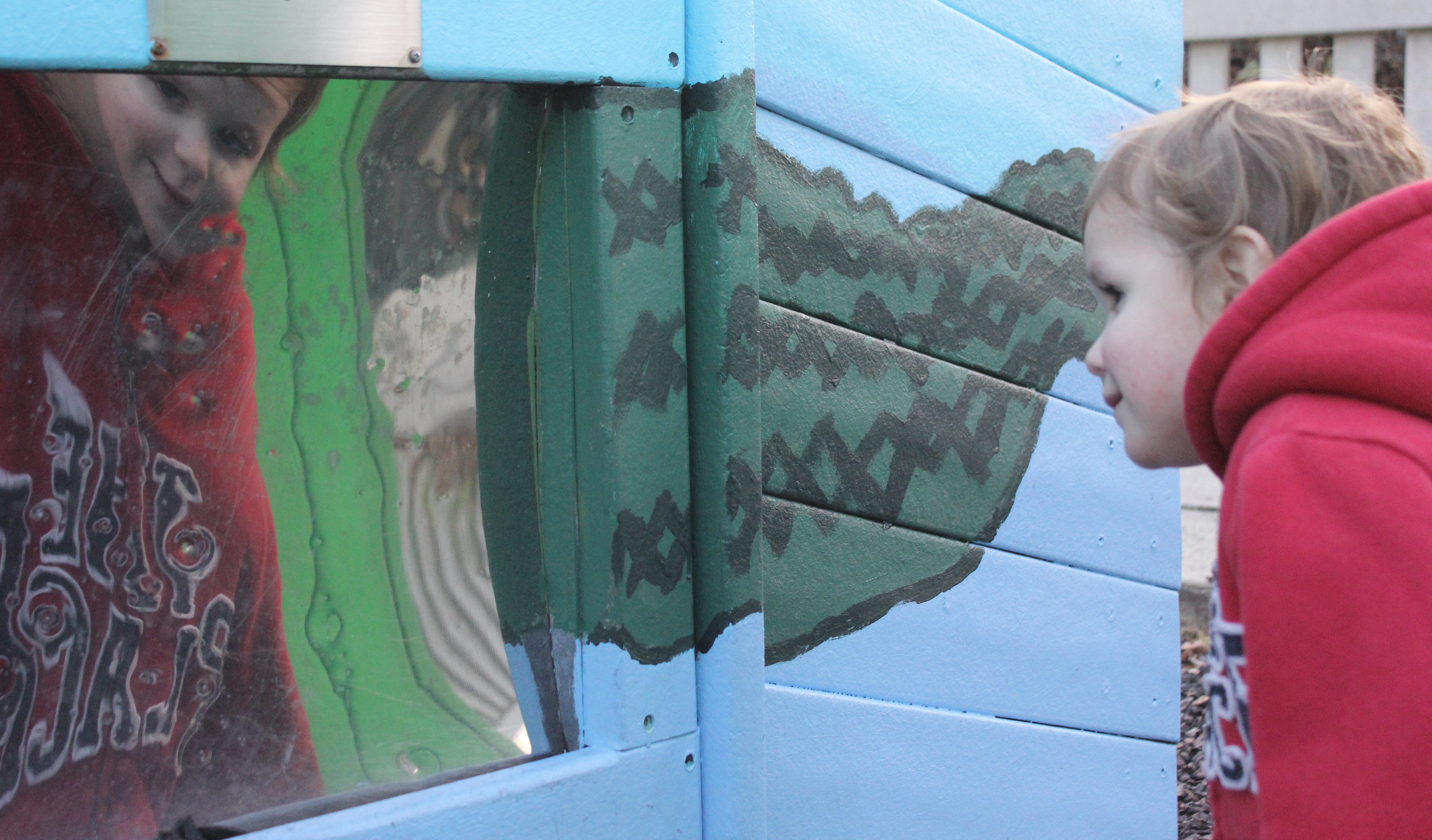
At age 18 months, my son was diagnosed with autism. Since I had known for some time that he was autistic, the diagnosis was just a step. People told me I shouldn’t be sad, or even worried. I’m still trying to get over being denied the space to grieve for my little guy. People told me that we were the best kinds of parents for a child who needed extra help finding his way. People told me that there were lots of therapies that would help, schools that would help, diets that would help, books that would help. People told me we didn’t need any help and that he would be fine. Again, and again, they told me we shouldn’t be sad or worried. They told me, instead of being sad, I should appreciate my sweet little boy.

They made me feel like I didn’t appreciate him even though my heart was broken because of how much I loved him. They made me feel like being sad was evidence that I wasn’t appreciating the little boy in my arms. I felt sad because I didn’t want things to be so hard for this baby I loved so dearly. I felt deeply shamed by my sadness.

The thing is, the therapies didn’t help him. The attempt at diets didn’t help. He didn’t just magically start talking, sleeping, or eating. My boy retreated farther and farther into himself that year and nothing we tried was reaching him. Some nights he would stay up all night and scream. Some nights we took turns sitting with him while he shrieked and kicked and hit his head. Some nights we still do. He wouldn’t wear clothes or eat foods. Because of his food aversions, he somehow subsisted on only blueberries for an entire year. A feeding therapist would come and encourage him to touch new foods, but that attempt at desensitization never seemed to elicit any change. I didn’t know what was making him sad or even if he was sad. Maybe he was crying because he was in pain. Maybe he was afraid, or bored, or frustrated. The only thing I had to offer him were hugs.

From one part of the autism community, I learned I wasn’t allowed to talk about the hard parts to anyone. They said, if I talked about the sad parts then it was only because I wanted attention. Talking about the sad parts meant I wanted to make it about me. I wasn’t allowed to talk about his struggles because that would be exploiting his privacy. If I loved him, I would only talk about the positives. I would focus only on the positives and I would, above all, never make what was happening in our lives sound dire or sad.

From another part of the autism community, I learned I wasn’t allowed to talk about the positives. They said, if I only talked about the happy days then I wasn’t being honest about how hard autism is. They said, If I just talked about the positives then no one would ever really know the struggles our kids go through every day. Talking about the positives was being superficial, and I was doing a disservice to my child who needed real help and honest attention.

I wasn’t allowed to talk about any of the new things my little guy could do because that was implying his worth was related to his abilities. I wasn’t allowed to talk about the things that my little guy couldn’t do because that was fatalistic and depressing. I learned that to say one thing is limiting, hopeless, cruel, and intrusive. I learned that to say the other thing is to be dishonest, insincere, ableist, and fake. I was taught that the only thing truly safe is silence.

Some days it feels like the silence is an eight foot tall fence around our lives. Some days I hope people can try to forgive me if I say the wrong thing. Some days are hard. Some days hurt. Please don’t assume that the hard days only hurt because of my expectations for my son. That they only hurt because of all the things I want that I am missing out on. You see, I also have four neurotypical children. There is no part of parenthood that I am missing out on.

The hard days hurt because they are sad. I feel sad when my little guy can’t tell us what he wants. When he screams and hits his head repeatedly because he is so frustrated. When he is trying so hard to tell us what he wants but the only thing he can say is “rectangle.” I feel the worst when months go by and he doesn’t try to tell us anything at all. I don’t want him to be lonely, or scared, or hungry, or in pain. I especially don’t want him to feel those things and know that there is no one in the world he can really tell about it.

I feel sad when we can’t go places as a family because of the noise, the people, or the confinement. When I see another boy my little guy’s age give my baby girl a kiss or a hug, my heart hurts a little. You see, she loves her big brother and has been trying to get a hug from him her whole life. Your little boy doesn’t even really know her and gave her one like it was nothing. It hurts when people say, “what a good boy!” when neurotypical children are expressive of their feelings like that, because that implies my son is “bad” for being unable to. I feel sad when my little guy will only sprinkle dirt, or chalk, or the fine grit by the side of the road. When it goes on for a long time, I worry that I have lost him forever somewhere. I wonder how he is. I feel afraid when he rejects a food because he only eats a few as it is. I worry that we will have to try a feeding clinic. I worry that the clinic will cause him to eat even less, or that he will eat less if we don’t try a clinic. I worry about putting him in preschool next year because maybe it will be too ABA or too demanding, or not demanding enough. Or, maybe it will make him feel scared or sad. I worry about not putting him in preschool and stifling his future. I worry about doors left open and windows raised high enough for him to fit his head through. I worry about hot stoves, hot pot handles, running towards roads, and any body of water.

I worry about a future I can’t predict. I worry about this silence I can’t see our way through.

Some days I can’t climb out of the sadness because I want so badly to talk to my son. To hear anything that he is thinking. To know his concerns and his questions, to comfort him.

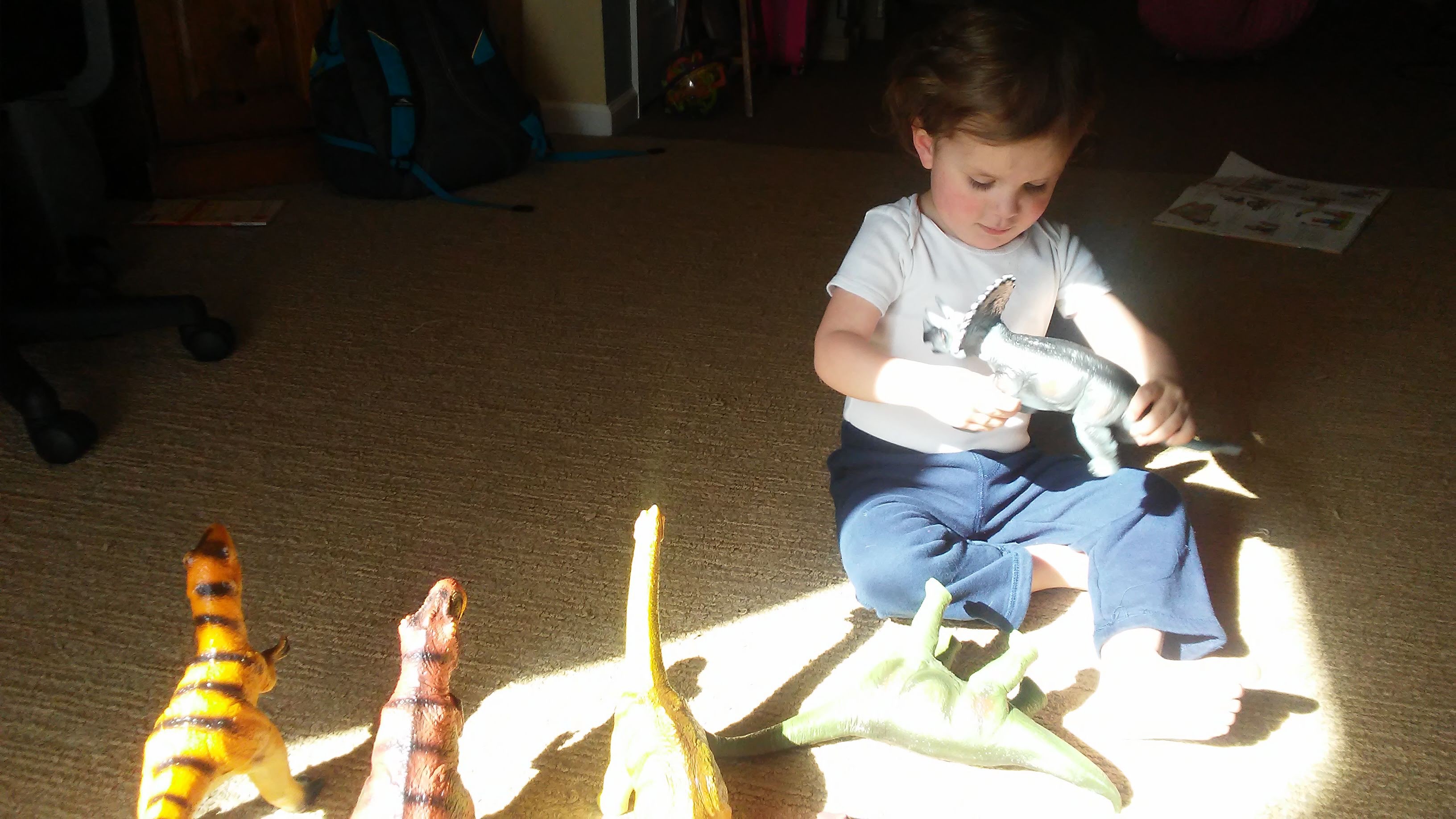
Some days are easy. Some days, despite everything he struggles with, he starts his day with the most contagious joy. He finds a window with morning sunlight streaming in, and plays for hours in the warm sunbeam casting a shadow on the wall. On those days I feel nothing but happiness for this special little boy who shares our lives.

Some days he jumps on his trampoline in the warm breeze and giggles up at the clouds. Somedays I am sure everything will be ok.

I feel happy when he smiles because the word “smile” really can’t encapsulate what he does at all. His whole face becomes dimples and sparkling eyes. Did you know that smiles have a sound? Well, they do. His do. And it is one of my very favorite sounds in the world.

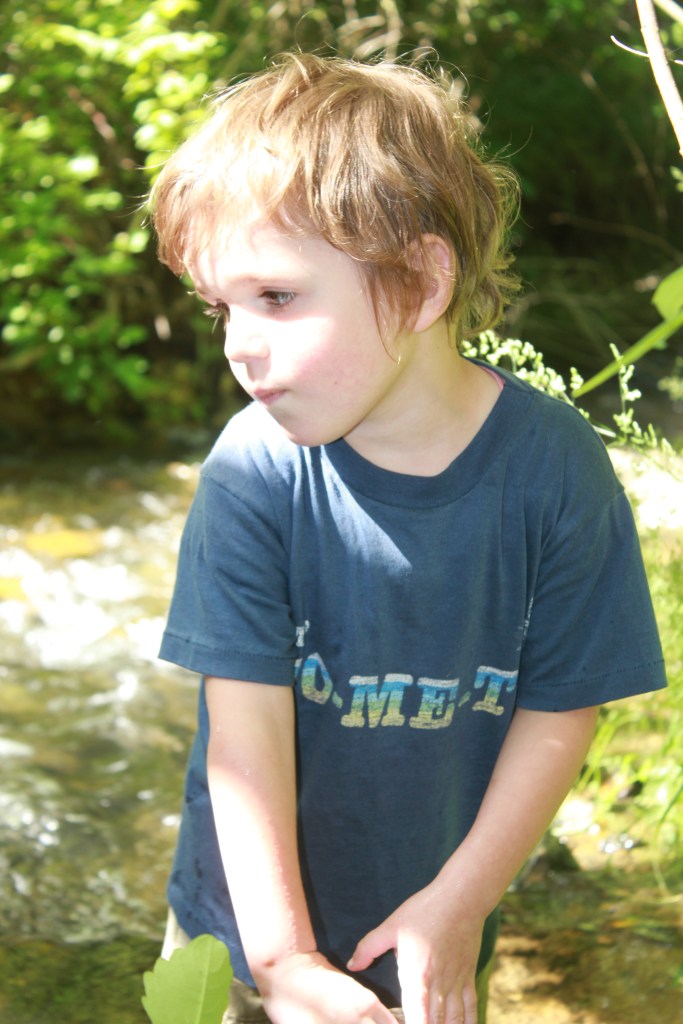
I feel happy when he knows we are driving to a park that he loves. He squeals and laughs as he dances his hands in the sunlight. When we finally get there, he runs ahead on his familiar path. He always goes to the little creek with a bridge first, then runs alongside the wetlands, and then finally runs on the trail that weaves through the woods.

I feel happy when my boy sees me from far away. Really sees me. When he walks over to me and reaches his thin little arms up to be held. When he puts his arm around my neck and pulls me in close so that he can do Eskimo kisses.

Then I feel like the luckiest mom in the world. Because, I am. All of these feelings are swirling around my life all the time. Sometimes, the coin-toss that is my day lands on sad . . . or on happy . . . or on just plain exhausted. So, please forgive me if I say the wrong thing.

I don’t want to be afraid of giving people space to feel sad, or happy, or scared. Afraid of giving myself or others the space to say the wrong thing. Feelings, both good and bad, are just the passing filters of the prism that is our time here. I want to believe that if we hold space for all of the colors of our experiences to be in the same room together, if we give them space to show up as they really are and get to know them, then we will be able to see eachother, and ourselves, more clearly.
What It’s Like to Be Non-speaking

A note to my littlest guy . . . 

If someone asked me what life is like for you, I wouldn’t be able to give them an answer.

I have no words to describe what your experience must be like. I have no words, because I simply don’t know what it’s like.

Only you know what life is like for you each day, my sweet boy.

img_20190602_134633600

I have no words to describe what it must feel like for you to wake from a nightmare at three and a half years old, get out of bed silently, and run toward our room.

What is it like to hope you find the door open, so that you can run right in?

Sometimes, we forget to leave it open.

Sometimes, you knock so lightly after finding it closed, and then curl up to sleep on the floor in front of our door.

The other night, I heard your footsteps thudding as you ran down the hall. You ran through the door and leaped in to our bed. You actually jumped! Then your skinny little arms waited for me to hug you tight, your eyes like saucers of glinting espresso. I wrapped my arms around you and breathed in the smell of your soft nutmeg colored curls. You pulled my arms around you even tighter.

You were so scared, sweet boy. I could feel your heart beating against mine. It felt like the heart beat of the little birds we found abandoned in their nest this spring.

What is it like to be so little and to have to face such big fears all alone?

img_20190602_134622676_burst000_cover_top

I should be able to fix these fears for you. The truth is, I don’t know how.

I couldn’t ask you to tell me about your dream the way I would have if your brother and sisters had come running into the room with a nightmare at your age.

I couldn’t tell you whatever you had been dreaming about would never happen. I couldn’t exaggerate the silliness of it so that we could laugh together.

Since I didn’t know what your dream was about, I didn’t know if I should be telling you that we have a fire alarm on each floor and that your older brother makes sure that the dead-bolt on our door is locked properly every night.

Sometimes I tell you these things anyway. In those times, I can feel the shift in your body as you begin to listen politely.  You listen like you appreciate the effort even though I’m mostly getting it all wrong.

20190119_145144

When your older brother was your age, he used to have nightmares about hunters in camouflage coming to get him with bows, arrows, guns, and knives.

He had seen a man dressed for hunting walk across our field one evening and the nightmares ensued. He too would run to my room and jump into bed next to me. I held him, just like I am holding you now, but I also listened as he told me all about his dream and what he was afraid of.

Next time the hunters came, I walked down and asked if they would come meet my son. I told them about his dream and what still scared him in the middle of the night. They were nice men, with little children of their own. They followed me up the hill to the house and talked to your brother. I saw him relax as they explained why they were wearing the clothes they had on, as they told him about their little boys at home, as they apologized for making him afraid.

He never had those dreams again.

But you, my littlest boy, your bad dreams keep coming.

In the middle of the night, in the morning, the only thing I really have to offer you is a hug.

A hug that is just as much you hugging me as it is me hugging you. Most days, we are just barely holding each other up. There are no words to describe how helpless this feels as a parent.

Tonight, is no different. I have no words to help you feel better. No words to convince you that I understand.

In the morning, I know you will smile and laugh when you are sitting in the bright crack of sun that finds its way in through our back window. Oh, how you love the sunlight. Unbridled joy floods your face when you find the warmth of it early in the morning. 

20190323_155220

When you dance your hands and can’t help but laugh to yourself, a real belly laugh, I would give almost anything to know what you’re thinking of.

Your kind eyes are so often full of questions or brimming with a joke you’d love to share. There are no words to describe how it feels to only be able to kiss you on the head when you have a question, to have only a hug for you when you’re afraid, and to only watch your beautiful smile as you laugh. I want to give you so much more.

What is it like for you to have a head full of questions that no one will answer?

I imagine it is like growing up in a foreign country where no one speaks your language, not even your parents.

I imagine I have absolutely no idea what that would feel like.

Your brothers and sisters had so many questions at your age. I remember many of them like they were spoken yesterday.

“Momma,” they would say, “Where are we going?””

“How long until my birthday?”

“Why does my tummy hurt?”

“When will you be home?”

“Will my cut get better?”

“Will I be a daddy when I grow up?”

“Can I still live with you when I grow up?”

“Are you going to die?”

“What does ‘hope’ mean?”

They also loved to ask me to watch them as they mastered new things. They would say,

“Watch me, Momma!” Then they would run, swing, jump, bike, color, swim . . . wanting to make sure that I didn’t miss any of their new abilities. They would keep checking in with me, “are you still watching, Momma?”

But you, my littlest boy, were born into so much silence.

I say I don’t have the words to describe how you feel, but I have no doubt that you do. You have so many words tucked in that little head of yours. You have been listening, and learning, and listening ever since you first opened your eyes.

Your words are there, they just can’t seem to find their way out.

Even though I don’t have the words to describe how you’re feeling tonight, I hope you know these things:

I’m proud of you, my sweet boy.

You are trying so hard everyday.

I see you.

You are brave, and kind, and you are far more independent than you should ever have to be.

I know you love the sound of wind in trees, a rippling creek to throw stones in, beams of morning sunlight, and running along a wooded trail.

I know that the only thing you have ever pointed to was a full April moon.

I know I am so grateful that I get to be your Momma. I’m grateful that I get to share each of your days with you.

There is nowhere else in the world I’d rather be.

img_5403 (2)

Habitat Destruction

A Week of Forevers

50722783_2019256551522442_7950688028197587144_n

This week was a mixed bag. Or maybe, a grab bag. I guess I don’t really know what it was but I’m confident the word bag should be included. Maybe.

It was hard and good, happy and hopeless, hopeful and unrelenting, energized and bone-weary. It simultaneously flew by and seemed like it would never end. In short, it was a normal week. Our new normal, anyway.

On any given day I felt that our life was certain to be filled with nothing but trying to push our sweet boy up hills he might not even care to be at the top of. This thought made me feel exhausted. And scared.

On any given day I felt overwhelmed with worry about how hard it will be to help my little guy master basic things, like using a fork for example. I handed Rae one the other day and she proceeded to effortlessly use it to eat everything off her tray. She had never used one before, but I guess she had been watching us all along and was patiently waiting for her turn to try.

I should have been able to simply clap for her and smile since yet another accomplishment was checked off her “big girl” to-do list.

I did smile, and clap. But, I also felt sad. . . and maybe even a twinge more frightened.

Actually, I felt absolutely knocked down.

I felt afraid and overwhelmed for my Ryan thinking of how impossibly far off a task like that seems for him right now.

Watching the ease at which she mimicked and mastered this new task, I felt the weight of each of the steps involved in something so seemingly simple: Being comfortable with foods (Ryan only eats four or five), imitating others, seeing the need to take the longer road to get food into your mouth when hands are faster, sitting near other people who are eating (the sound or sight of others eating is completely intolerable to him). . .

I sat in that sort of fear for a few days. I let myself go to the place I try so hard to avoid. I read things that confirmed my fears. In our community, they aren’t ever hard to find. Mothers who are dealing with the most exhausting and frustrating parts of autism. I thought, yes. This.

This is real, and this is forever.

Once again, I felt unnerved by all the parents only pointing out the happiness and hope, the acceptance and the celebration of differences. My little boy is struggling. He can’t use his words. None of them. Even though I know he has so many. Life inflicted its own vow of silence on him before he could even ask any questions.

Can you even begin to imagine?

img_5560


Then, the sadness reminded me to re-focus our efforts. I made appointments, reached out, and tried to pare down our list of goals to the current essentials.

Hell, I even bought bubbles.

If you hang around our house much you will learn why bubbles are a last resort. Ryan loves them . . . entirely too much. Once they are in the house, nothing happens other than blowing bubbles.

Seriously, nothing.

We become zombie slaves to bubbles.

Have you ever blown bubbles for four hours straight? We have. We work in shifts. Also, our little guy doesn’t usually let us sit while we blow them. He wants us to stand. The bubbles fall in the light better that way.

But guess what? Now he has a word again. Bubbles. We made him work for all those bubbles. He also started saying, “come on” again.  So now we have TWO things. Two that weren’t there before. And that’s just this week.

Here’s the thing about sadness though. Other than reminding me to re-focus our efforts, the sadness didn’t do any good for anyone. Not for me, not for other people, and certainly not for Ryan.

We have plenty of hard days. Believe me. But, even though they’re real and even though they’re not going away, they’re not even the tiniest bit more real than all the happiness.

They aren’t more real than all the happy squeaks and the dancing hello, the belly laughs at pillow fights, and they sure as hell aren’t more real than big marching shadows in the sun.

img_5660 (3)

Mary Oliver, one of my favorite poets, died this week. Among many other things I love her for, she defined prayer as paying close attention.

Praying

It doesn’t have to be
the blue iris, it could be
weeds in a vacant lot, or a few
small stones; just
pay attention, then patch

a few words together and don’t try
to make them elaborate, this isn’t
a contest but the doorway

into thanks, and a silence in which
another voice may speak.

— Mary Oliver

Which reminded me, paying close attention to all the hard parts isn’t the prayer I want to voice for my little guy. That, without a shred of doubt, isn’t the kind of prayer I want him to see me spending time on. I want to err on the doorway into thanks part. I want the voice I make room for to be one of joy.

In the autism community, writing about the joys might make me sound pretty trite. Because so much of our lives and the lives of our children is just so damned hard. But,

I’m willing to risk sounding trite.

I won’t spend our time together paying too close attention to the hard parts.

49745796_1159105634251633_1866734276513044996_n (1)

If I hadn’t been ready to pay attention to the joy yesterday, I would have missed seeing the joy on Ryan’s face after he put one tentative little leg over his wooden scooter for the first time. I’ve shed tears over the lack of use most of his toys have gotten. Lots of them. Some days, I have thought it would best to get rid of them, so they aren’t some sort of painful reminder. After all, he’ll never use them. . .

Just being honest. Right?

Then, one day.

One day when he was ready, he decided to put his careful little leg over the back of the scooter.

And sit.

And SCOOT, for God’s sake.

We celebrated (but not too loudly, because our guy likes medium celebrations). We took pictures. We were a veritable paparazzi of joy.

And that was just yesterday. Who knows what other things will surely “never” happen that Ryan will suddenly decide to do. Who knows when joy will suddenly burst through the crack in the door.

I’ll try my best to keep watching out for joy. To never decide what’s impossible. To pay close attention to the good parts and keep the doorway open.

After all, this is real. This is forever. And none of us are getting out of here alive.


Different Eyes

25440227_10214753440290456_8879315490320654395_o

Last year at this time, I was so scared of autism.

I thought it meant I would lose my child.
I thought it meant that he wouldn’t receive or want my love. I thought it meant that we wouldn’t ever be able to communicate with each other.
I thought it meant he would be lost and alone in his private world.
The fear of that took my breath away.

I thought it was crazy that people took comfort in the words of adult autistics.

They weren’t like my kid. They could talk.

But, while reading Neurotribes, I spent the past months reading and reading the words of adult autistics.

Words from adults who can’t speak, only type.

They are thoughtful, empathetic, strong, and nothing short of amazing. They have given me more insight into my little guy than any books by parents of autistics have.

img_5264Now, when I see Ryan making rapid mouth movements in front of the mirror, I don’t see a scary foreign stimming thing, I see a little boy practicing looking like he is talking. . .eagerly waiting to talk. I see myself standing in the background learning how to really listen.
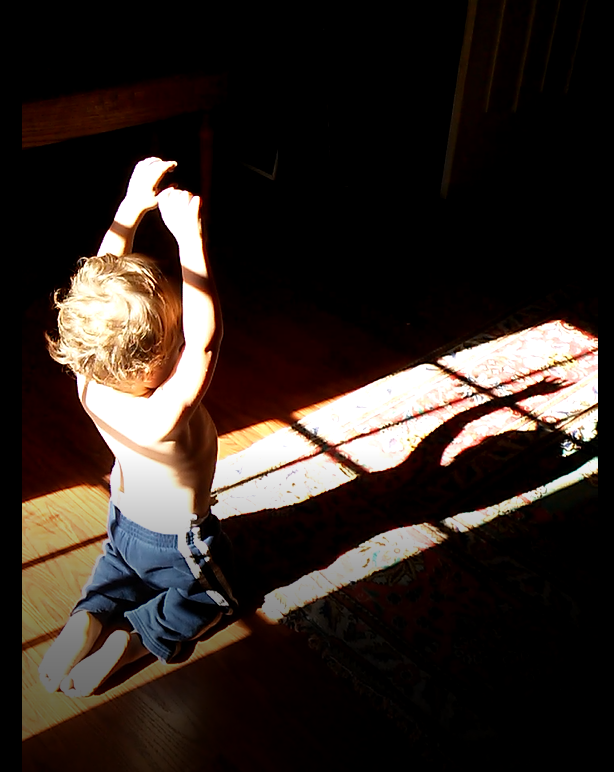
Now, when I see Ryan dancing with his shadow, I don’t see a child who only wants to be alone, I see a boy who is a damned good choreographer and who is happy when we join him. Sometimes, I see a little buy who is creatively filling up space because he is bored and is waiting for someone to ask him to play.

Now, instead of not hearing him say, “Momma, I love you,” I feel him pull me to the couch, contentedly sigh, and snuggle. I feel so much love. Feeling is the best part, after all, isn’t it?

Some days are still hard, still scary. Because some days we get it wrong. Some days he is agitated, sad, restless, and we can’t guess what he needs. But, he’s helping us understand his language more and more each day.

Ryan brings each one of us so much joy. The first thing Willow said when she popped her eyes open this morning was, “Where’s Ryan?!” Not because she feels sorry for him, or wants to help him, but because he is fun to be around and has good ideas. Because he’s her big brother.

Ryan is happy, loving, creative, determined, and autistic.

We can’t wait to support him and cheer for every interest and skill that develops.

Today’s interest was the invention of Jazz Hands. Shadow Jazz Hands.

jazz hands

A Poem: “To No One”

Even if no one is listening
the children will still run down the halls of the morning
dragging themselves into coat and scarf
outgrowing everything learned
except that life is a gift that looks
different to every person with eyes
like fractured windows into the heavens
even if no one is listening
birds will still pull out their softest feathers
to prepare a nest for their young
they will gently carry food in their mouths
and they will warble at the first shocks of light
just like all those with wings before them
all the new babies will wake
and bend their mouths
finding oval, circle, smirk, shout
practicing shaping their lips
to support a lifetime of thoughts
The musicians will still gather at strings
to play the notes of their ancient voices
and the poets will still look out their windows
to see into themselves at the end of the day
we will still enter and leave this ancient room alone
we will still sing songs when we bury our dead
and steady ourselves with each other
as life and death slowly sway and dip to time
we will still have our babies and cradle our old
and the bald eagles and black vultures
will still mate for life in any season
and the trees will still burst into color
as children’s bones are made out of stardust

Even if no one is listening
I will still take off my shoes on the first days of summer
and warm myself by the people I love
and a space will still exist between us
I will still feel the softness of the earth
I will still search for the words
Even if there is no mind in the heavens
Even if the expanse is only cold color and hot spark
I will still say thank you from the same place
Inside myself that the rooster crows
at each new dawn, throwing his whole being
into the sound because we have survived
the darkness again and discovered breath
Even if no one is listening

Hard Days are Allowed

When I think about my experience with autism so far, there are a few moments of awakening that really stand out.

One of those was Ryan’s second birthday. We had known about his autism for four months and, naively, I thought that the ups and downs we had experienced since that time meant we were “through” the acclimation phase. I thought that we were already prepared to settle in to our altered version of normal.

That day, we drove over an hour to meet with most of our family and wanted to incorporate a birthday celebration for Ryan. Ryan was anxious as soon as we walked in the door.

He doesn’t acclimate well to large groups of people and he usually asks immediately to be taken outside. He asks by grabbing the closest person by the hand, dragging them to the nearest door, and throwing their hand at the handle. He then says one of his only words, “OPEN,” and cries if he isn’t taken outside.

Because of this, we had been outside almost the entire time that day. My husband and I took turns sitting in the yard as Ryan threw fistfuls of sand or dirt into the air.

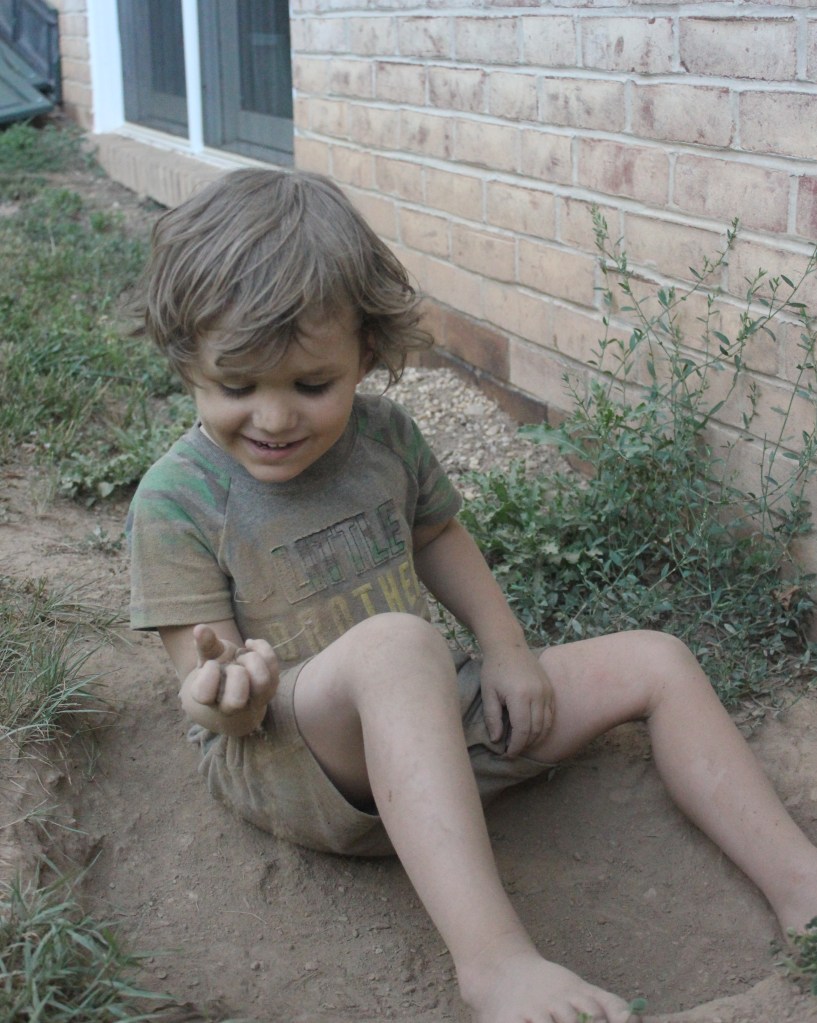
Watching dirt, sand, or leaves fall to the ground has always been a favorite visual stim of his. He found some old charcoal ash from a grill and it was growing impossible to keep him away from it. His face, hair, and hands were covered in a sandy, sooty, dirt mixture.

Finally, we were able to coax him inside to eat and he settled into playing with a shape sorter toy for a while. He loved rotating the shapes quickly in front of his eyes and we were just relieved that he was inside.

It seemed like the best chance we would get to sing to him for his birthday. We put a candle in the desert and family gathered around to sing. My husband has a big family, and most of them have children, so there were easily 25 people making a circle around Ryan as they sang happy birthday. Something any of my other children would be absolutely thrilled about.

I have five children and I remember each one of their second birthdays. A 2nd birthday is usually exciting because it’s the first birthday that the child is fully aware of. I have a favorite picture of one of my daughters proudly holding up two fingers and grinning ear to ear on her second birthday, waiting for guests to arrive. Her guests. She was so excited, it was contagious.

Pictured above and to the right is my middle daughter on her 2nd birthday. My 3-year-old daughter celebrates with her.

On Ryan’s second birthday, he seemed completely unaware that this day was different than any other. He seemed not to notice people were singing. He certainly didn’t notice people were singing for him. He kept rotating a wooden triangle in front of his face. We called to him, clapped, and eventually blew out his candle. He never looked up.

I felt sad and somehow negligent. Negligent because I was just sort of waiting for it to be over. Hoping it would be over. None of this was for him. It was for us, for me. It was because we were supposed to do it this way. And, going through the motions felt like salt rubbed in the fresh wound of our diagnosis.

I remember realizing then that everything in our life would be different. Really different. Even something casual, like singing on a birthday, would need to be intentionally prepared for. We would need to do it at our house, remove toys and distractions, make sure he had gotten enough sleep the day before, make sure we had practiced multiple times with less people.

And it still might not work. He still might not like it. It still might be more for us than for him.

I don’t want to do things just because we are supposed to. I want to do things he enjoys. I want to share enjoyment with him. That day, I realized just how hard it was going to be to do things we could share with Ryan, to stumble on the things he would truly enjoy.

There was no picture of that birthday. Something I regret. But, what would it have shown? A mom off to the side with a vacant look on her face . . . waiting for the song, the occasion, to end. The top of a little boy’s head as he rotated a triangle in front of his face. A group of people singing, trying to pretend they didn’t notice?

Pictured above is my son on his 3rd birthday with his friend.

I went home and finally cried myself to sleep about how unfair it all was. I’d already spent plenty of time crying because I was afraid for Ryan, afraid for his future, afraid for all of us, but I’d never cried because it just plain wasn’t fair. To any of us.

We should be able to enjoy a birthday, HE should be able to enjoy a birthday. At the very least, we should be able to be openly sad that we couldn’t enjoy a birthday. But, there was no space for that either.

Much of the world seems to expect us to go through the motions happily. Pretend everything is always fine or improving. Parents with special needs kids are only allowed to speak positively.

We are supposed to be parents of children that teach everyone about tolerance and acceptance. Never parents who are sad that their kids can’t share experiences or parents who feel sad because their children are frustrated. Sadness from a special needs parent is not P.C, especially in the autism community.

If we are honest about the hard days, we risk being accused of not appreciating our child enough. As if feeling sad that our child is frustrated or alone could possibly mean you love them less.

If we express frustration over not being able to communicate with our child, people accuse us of only wanting to talk to them for my own sake.

What kind of parent doesn’t want to communicate and share life with their child? Wouldn’t not wanting that make me a terrible parent?

People accuse you of only looking on the down side of autism, even if it is the first hard day you’ve shared after spending month after month only mentioning the happy days and happy pictures.

I realized then that there were often going to be times that were truly hard. Hard for me, hard for my family, hard for Ryan, and that we were often going to have to go through them alone. I think the alone part was the harder realization.

My hope is that our tribe will grow gentler with their assumptions. That we won’t suggest by our responses that parents having hard days love or value their children any less than they do on good days. Even autism parents.

I hope we will provide each other with safe space to be sad, to feel disappointment and fear. I hope we will be allowed to speak up when times are hard, and still be known as parents who love their children immeasurably.

I hope we will give each other room to value the spectrum of emotions in our stories, that we will sit with the truth that there is beauty and value in every one of our days, even the sad ones.

Learning to Dodge the Comparison Trap, Again. . .

Ryan is my fourth child. He is my second son, and he is eight years younger than my next youngest child.

For some crazy reason, I thought these facts meant that I would have a “handle” on the parenting thing when Ryan arrived.

When he was born, I felt relaxed, even confident. During Ryan’s second year, my oldest daughter would ask things like, “Shouldn’t he be saying more words?” “Shouldn’t he be walking now?”

I laughed it off and told her that babies and kids arrive at milestones in their own time. Babies who walk early don’t turn into adults with “exceptional” walking skills, I would joke. Early doesn’t matter. And then, sagely, I would say something like, “Just enjoy where he is now. You’ll miss these baby days.”

At 15 months, Ryan still hadn’t spoken or even paid much attention to us yet. I shrugged it off and waited for my little boy to flourish in his own time.

But, he didn’t. He lost words and retreated farther into his private world. He stopped saying “momma.” He stopped saying the names of objects in books when you looked at the pictures with him. At almost three, he still doesn’t do those things again.

When Ryan was one, I knew myself to be a mom who didn’t operate on comparisons. I didn’t feel threatened if other children read more books, were better at sports, or performed better in school than my children.

After all, those things are just actions and the value of my children far outweighs their current prowess in academics or athletics. It even outweighs their tween attitudes.

It is their thoughts, feelings, experiences, and joys, that make them the valuable individuals they are.

After our autism diagnosis, I found I somehow misplaced all of the supposed “wisdom” I thought I had as a seasoned parent. I found out that I hadn’t compared my older children to other children, not because I knew so much better, but simply because life was easy for us.

There was no reason to compare.

After our diagnosis, I started comparing. I started judging myself when I heard parents talking about their “typical” children. I started feeling like everything they were saying was some sort of indirect judgment of Ryan. I felt defensive. I felt gross for feeling defensive.

If I saw a picture another mom took of two little siblings hugging each other with a caption like, “He is such a good brother,” my heart would sting, and I wouldn’t want to talk to other mothers for days.

I would hurt and then I would compare, “does that mean they think Ryan is a “bad” brother because he has never hugged Rae or even played with her once?”

Ryan was into giving kisses to his little sister one day, because he was practicing kissing for some reason . . . I think he saw it in one of his board books or something. . . Or, maybe it was “Kiss Day” and it is going to be more of an annual thing, you can never tell with Ryan. . . but, I knew it could end any second, so I rushed to take the one and only picture I have of Ryan kissing Rae.

It was my unnecessary proof to the world that Ryan was a “good brother.”

Usually, Ryan just covers his ears, yells “all done!” and runs away when Rae tries to go near him. Because “baby” is synonymous with noise to him. (“All done!” is one of his only phrases and he uses it to mean he doesn’t like whatever is happening).

This doesn’t mean he’s a bad brother though. He doesn’t understand play, or cuddling, with a tiny person who is more likely to bop him on the head and screech at him than she is to lie still and let him use his toes to pinch her skin (this has always been one of Ryan’s favorite ways to “cuddle”).

I started to realize that hearing other people’s toddlers referred to as “good older brothers/sisters” also hurt because it felt like it was a reflection on me. I wasn’t a good mom since my toddler wasn’t affectionate to my baby. I hadn’t been able to teach him to care appropriately.

I felt these same sorts of feelings when I heard other people describing children with phrases like, “He’s advanced.” Or, “He’s really smart . . . he says so many words already!” And even, “He’s so bright!”

It made me feel immediately like they were saying the opposite about Ryan and me.

After many months of having a pity party for us, for myself, about it, I realized that they weren’t actually saying those things, I was.

I was still stuck in a mindset that intertwined performance and value.

But, I know Ryan is “bright.” Very bright. Even though he doesn’t show it the same ways other kids might.

I know it when I see the sparkle in his eyes that means he’s just thought about something that excites him, even if he doesn’t know how to communicate to me what that is. I know it when I hear him laugh delightedly while running outside in the sunshine.

I know he is smart when he comes up with his own ways to communicate his needs. He finds the nearest person and will lead them to what he wants.

We know that if he takes our hand, leads us to the refrigerator and then gently throws our hand, that means he wants fruit. If he throws our hands up high, that means he wants his frozen treat to eat. I know he’s smart then, and a host of other times.

I know he’s kind when he cries because someone gets hurt in one of his movies. If something is too sad or violent he says “Alllll done!” and is desperate to leave the room.

Even if he didn’t do these things, it wouldn’t mean that he wasn’t bright or kind. It wouldn’t mean he wasn’t a good brother or son, and it wouldn’t mean I was a bad mom.

No one is getting out of here alive. Every person’s time here is equally valuable. Ryan’s life has immense value even if he never hugs his sister to show love, or learns to use words, or cooperates, or follows directions.

I can be a good parent even if my child can’t call for me or talk to me, even if he doesn’t hug, Even if he mostly throws sand at people some days.

Everyone gets a finite amount of days to live, the best way they are able, and that makes them precious.

I knew all of this in my head before Ryan was born but watching Ryan’s life has made me feel the truth of this in my bones.

Today, Ryan is acting out whole scenes of his new favorite movie. Peter Pan. He zooms around the room feeling like he’s flying while saying snippets like, “Tuna Pig!” His “pronunciation” of Peter Pan is more about rhythm and it sounds exactly like “Tuna Pig.” We adore it.

Today is a good day. Today we are laughing more than crying. Today we are enjoying ourselves

I guess you could even say that today we are terribly bright. I mean, bright for our ages.